- English
- French
- German
- Portuguese
- Spanish
- Russian
- Japanese
- Korean
- Arabic
- Greek
- German
- Turkish
- Italian
- Danish
- Romanian
- Indonesian
- Czech
- Afrikaans
- Swedish
- Polish
- Basque
- Catalan
- Esperanto
- Hindi
- Lao
- Albanian
- Amharic
- Armenian
- Azerbaijani
- Belarusian
- Bengali
- Bosnian
- Bulgarian
- Cebuano
- Chichewa
- Corsican
- Croatian
- Dutch
- Estonian
- Filipino
- Finnish
- Frisian
- Galician
- Georgian
- Gujarati
- Haitian
- Hausa
- Hawaiian
- Hebrew
- Hmong
- Hungarian
- Icelandic
- Igbo
- Javanese
- Kannada
- Kazakh
- Khmer
- Kurdish
- Kyrgyz
- Latin
- Latvian
- Lithuanian
- Luxembou..
- Macedonian
- Malagasy
- Malay
- Malayalam
- Maltese
- Maori
- Marathi
- Mongolian
- Burmese
- Nepali
- Norwegian
- Pashto
- Persian
- Punjabi
- Serbian
- Sesotho
- Sinhala
- Slovak
- Slovenian
- Somali
- Samoan
- Scots Gaelic
- Shona
- Sindhi
- Sundanese
- Swahili
- Tajik
- Tamil
- Telugu
- Thai
- Ukrainian
- Urdu
- Uzbek
- Vietnamese
- Welsh
- Xhosa
- Yiddish
- Yoruba
- Zulu
Ministry of Transport Innovative Measures: Autonomous Vehicles and Drones Lead the New Era of Smart Logistics!
Introduction
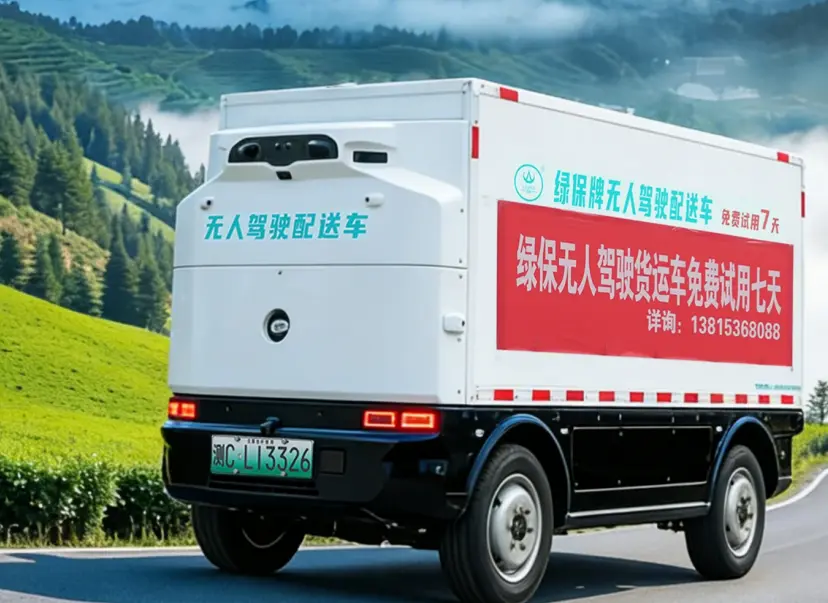
Against the backdrop of increasingly digitized global economy, the logistics industry is facing tremendous transformation. On December 3, the Ministry of Transport launched a series of policies and measures related to smart logistics at a thematic press conference, particularly in promoting the application of autonomous vehicles and drones, bringing new opportunities and challenges to the industry. This article will delve into the market phenomena behind these new trends and how they promote cost reduction, quality improvement, and innovative development in China's transportation logistics.
Current Status and Challenges of the Logistics Industry
As a crucial link connecting production and consumption, logistics efficiency and costs directly impact the operation of the entire economic system. According to statistics, China's logistics costs as a percentage of GDP remain relatively high at 14%, leaving room for improvement compared to developed countries. In this environment, obtaining lower logistics costs and higher service quality becomes particularly important.
The Necessity of Digital Transformation
As market demands evolve, the logistics industry urgently needs digital transformation. Digitalization not only improves work efficiency but also reduces labor costs. Some enterprises have already piloted technologies such as unmanned warehouses and intelligent dispatching, achieving certain results. The policy direction of the Ministry of Transport precisely aligns with this trend of the times.
Application Prospects of Autonomous Vehicles and Drones
At the press conference, Wang Xiuchun, Deputy Director of the Transport Service Department of the Ministry of Transport, mentioned that future efforts will orderly promote the demonstration application of autonomous vehicles and drones. This means that the operational model of the logistics industry will undergo revolutionary changes.
Development Opportunities for Autonomous Vehicles
Autonomous driving technology has already shown promising results in trial operations in some cities. If widely applied in logistics transportation, it will significantly enhance the efficiency of express delivery and cargo transport. By building fully automated logistics networks, enterprises will be able to respond more quickly to market demands and reduce transportation time.
Potential of Drones
Drones also demonstrate enormous potential in low-altitude logistics. In some remote areas, traditional logistics transportation methods are often constrained by geographical limitations, while the flexibility of drones enables rapid delivery. Whether delivering medicines, food, or other items, drones can provide customers with more convenient services.
Orderly Promotion with Policy Support
The proactive measures of the Ministry of Transport reflect the government's emphasis on smart logistics. Policy-level support will accelerate the scaled application of autonomous vehicles and drones. For example, digital transformation of transportation infrastructure and formulation of relevant standards will constitute important cornerstones of the unmanned logistics system.
Standardization and Safety
While promoting the application of autonomous vehicles and drones, standardization and safety are of paramount importance. Government departments need to formulate a series of rigorous technical standards and safety specifications tailored to the operational characteristics of autonomous vehicles and drones to ensure the safety of users and the public.
Case Studies: Successful Domestic and International Experiences
To better understand the application potential of autonomous vehicles and drones in transportation logistics, we can draw on some successful international cases. For instance, in the United States, Amazon has long begun using drones for rapid delivery of small parcels; while in Japan, Toyota is also testing autonomous trucks.
Amazon's Drone Experiment
In certain regions, Amazon's drone trial operations have already begun, capable of delivering goods to users within half an hour. Such efficiency not only improves customer satisfaction but also saves considerably on transportation costs. The success of this model is precisely based on its well-developed infrastructure and mature technology.
Toyota's Autonomous Trucks
Toyota's autonomous truck project in Japan also provides new insights for the logistics industry. During continuous highway driving, autonomously navigated trucks can precisely control speed and direction, reducing risks caused by human error and improving transportation safety.
Conclusion: Vision for Future Smart Logistics
The Ministry of Transport's innovative measures this time are not merely about promoting the simple application of autonomous vehicles and drones, but represent a spiritual transformation. Looking toward the future, only by achieving comprehensive digital intelligence in transportation logistics can we truly enhance industry efficiency and quality. We look forward to these policy measures driving China's logistics industry into a brand-new smart era, avoiding the dilemma between high costs and low efficiency.
Furthermore, as technology advances, industry participants must continuously learn and adapt to gain advantages in future competition. In summary, the application of autonomous vehicles and drones in transportation logistics is undoubtedly a key to unlocking the new era of smart logistics. In this process, each of us may become beneficiaries. Are you ready to embrace this transformation?
Tell us your requirements – get a tailored quote and technical support within 24 hours.